


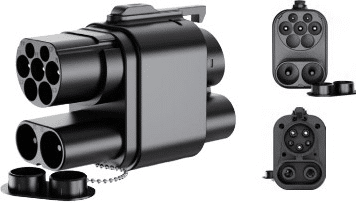

Choose the direction first. Match the charging connection to the vehicle inlet, then confirm the adapter model and the combination it supports.
Connection direction for your enquiry
Use the direction below when describing an adapter enquiry. These are connection families; a listed interface pair does not confirm compatibility with every vehicle or charger.
CCS2 → CCS1
Adapter generation, charging equipment and vehicle combination.
CCS2 → CHAdeMO
Communication support, vehicle software and operating limits.
CCS2 → GB/T
Adapter version, vehicle protocol support and electrical limits.
CCS2 → NACS
Vehicle model, model year, market and adapter generation.
Type 2 → GB/T
Single- or three-phase configuration and vehicle charging requirements.
Type 2 → J1772
Supply configuration, current limit and the vehicle inlet.
Type 2 → NACS
AC adapter configuration and the intended vehicle and market.
Direction is not reversible by assumption. Keep AC, DC and combined-mode versions as distinct configurations.
Send the charger and vehicle details with your enquiry. The same interface name can appear on different equipment generations and market versions.
Vehicle make, model, model year, destination market and inlet. Include relevant software information when requested.
Charging station make/model, connector and charging mode. Include the expected voltage and current range.
Exact part number, generation and instructions. Keep the ratings and operating limits attached to that version.
Ambient conditions, locking arrangement, handling needs and the intended operating pattern.
Ask for the configuration offered, its applicable instructions and the equipment combination covered by the compatibility statement.
An interface conversion does not by itself establish electrical or communication compatibility. Do not use an AC product for a DC application, assume bidirectional use or treat an adapter as a general voltage converter.
For fleet or distribution orders, identify the intended vehicle groups and markets. Where a compatibility test is proposed, agree the exact charger, vehicle, software version and acceptance conditions before the order.
Send the charging connector, vehicle inlet, vehicle model and country of use. Add the quantity and adapter version if already selected.